How To Install a Dryer Vent on a Stucco Wall – Detailed Tutorial!
Written by Stucco Champions — Southern California’s Authority on Exterior Plastering.
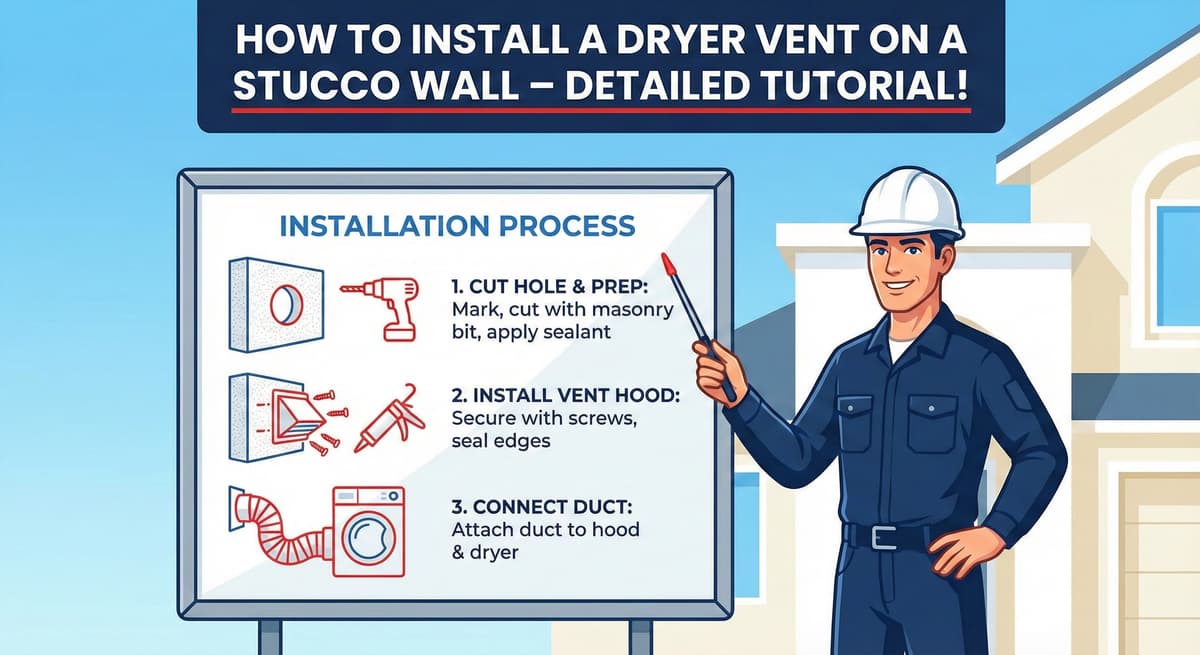
How To Install a Dryer Vent on a Stucco Wall: Detailed Tutorial
Cutting a hole in your home's exterior is stressful. Stucco is a rigid cement shell that cracks easily if you use the wrong tools. Furthermore, every penetration is a potential leak point. If you install a dryer vent incorrectly, you risk not only damaging the facade but also allowing moisture and pests into the wall cavity.
This guide breaks down the professional method for coring through stucco cleanly and sealing the vent to ensure the building envelope remains intact.
1. The Tool: Diamond vs. Percussion
The biggest mistake DIYers make is attacking stucco with a hammer drill and a standard wood hole saw.
The Result: The wood saw burns up in seconds, and the hammer drill shatters the stucco around the hole.
The Pro Solution: Use a Diamond-Grit Hole Saw (4-inch or 4.25-inch). Diamond cuts through cement like butter without the violent vibration that cracks the surrounding finish.
Free Assessment
Noticing Stucco Damage?
Get a free on-site assessment from a licensed contractor. $0 deposit, no obligation.
GET FREE ASSESSMENT2. Method 1: The "Clean Core" Technique
This is the preferred method for minimal damage.
- Locate the Spot: Ensure you are between studs. Use a stud finder on the interior drywall first, then transfer the measurement to the exterior.
- Mark the Center: Use a sharpie to mark your pilot hole.
- Diamond Cut: Attach the diamond hole saw to your drill (standard rotary mode, NOT hammer mode). Use a spray bottle to mist the wall as you cut; this keeps the diamond dust down and cools the bit.
- Remove the Core: Once you cut through the 7/8" stucco layer, stop. Pop out the cement puck.
- Cut the Lath: You will see wire mesh. Use Aviation Snips to cut the wire cleanly. Do not twist it with the drill, or you will unravel the mesh inside the wall.
- Cut the Sheathing: Switch to a standard wood hole saw to cut through the plywood and drywall.
3. Method 2: The "Manual Stitch" Technique
If you don't want to buy a $50 diamond hole saw, you can use a masonry bit and patience.
- Draw your 4-inch circle.
- Use a 1/4" masonry bit to drill a series of holes all along the perimeter line (like a postage stamp).
- Gently tap the center with a hammer and cold chisel to knock out the plug.
- Warning: This leaves a rough edge that will require more caulking to seal.
⚠️ The Waterproof Seal
This is the most critical step.
You must seal the gap between the metal vent pipe and the rough stucco edge. Use a high-quality Polyurethane Sealant (like Sikaflex). Do not use silicone; it eventually peels off stucco.
Protocol: Apply a heavy bead of sealant to the back of the vent flange before pressing it against the wall. This creates a gasket seal.
4. Securing the Vent
Stucco is not structural. Screws will strip out if driven directly into the cement.
The Fix: Drill pilot holes for your mounting screws. Insert plastic or lead anchors into the stucco. Then drive your screws into the anchors. This ensures the vent stays tight against the wall, preventing lint buildup behind the flange.
Conclusion: Precision Matters
Installing a dryer vent is a permanent modification to your home. By using a diamond hole saw and polyurethane sealant, you ensure the installation is clean, professional, and watertight. Don't rush the cut—let the tool do the work.
Related Resources
Last week, we shared Applying Stucco to Metal Buildings. If you are retrofitting a metal structure, the cutting tools are different.