Can You Apply Stucco Over Existing T-111 Siding?
Written by Stucco Champions — Southern California’s Authority on Exterior Plastering.
Can You Apply Stucco Over Existing T-111 Siding? A Renovation Guide
In the 1970s and 80s, T-111 siding (vertical grooved plywood) was the standard for cost-effective housing in Southern California. Today, many of those homes look dated and are prone to termite damage at the mudsill line. Homeowners frequently ask us: "Can I just stucco over it?"
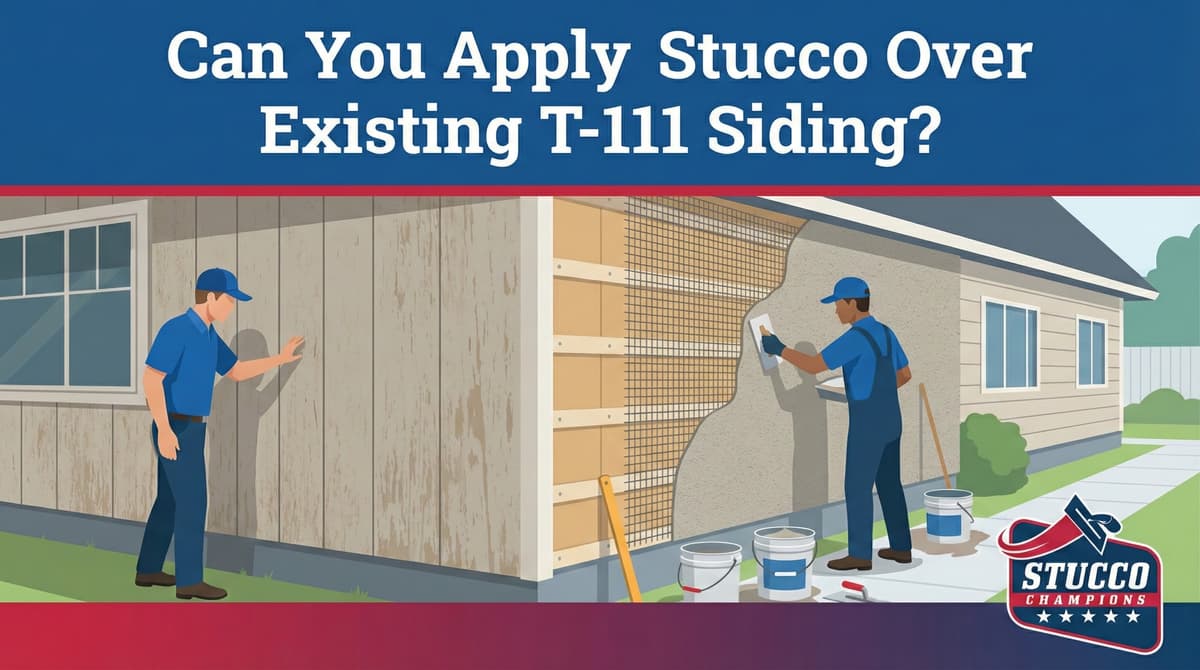
The answer is Yes. In fact, T-111 acts as excellent structural sheathing (shear wall). However, you cannot simply slap cement over wood. You must engineer a new waterproofing envelope that separates the moist stucco from the wooden substrate. This guide explains how to modernize your exterior without rotting your framing.
1. The Condition Assessment: Is the Skeleton Healthy?
Before covering the wood, we must ensure it is sound. T-111 is structural; it holds your house up against lateral forces (wind/seismic).
The Rot Check: We inspect the bottom 6 inches of the siding. If there is dry rot or termite damage, those panels must be cut out and replaced with new plywood. Covering rot with stucco does not stop it; it creates a greenhouse effect that accelerates the decay.
Free Assessment
Noticing Stucco Damage?
Get a free on-site assessment from a licensed contractor. $0 deposit, no obligation.
GET FREE ASSESSMENT2. Surface Preparation: Stripping the Trim
To create a seamless, modern look, the wall must be flat.
Trim Removal: We remove all wood trim around windows, doors, and corners. If we leave the trim and stucco up to it, the house looks "patchy" and creates water entry points. By removing it, we can run the lath continuously, creating a monolithic shell.
3. Waterproofing: The "Bond Breaker"
This is the most critical step. Stucco is wet; wood is dry.
We must install Two Layers of Grade D Building Paper over the T-111.
Why Two Layers?
1. Layer 1 (The Barrier): Protects the wood siding from moisture.
2. Layer 2 (The Sacrificial): Bonds to the stucco.
The tiny gap between these layers allows water to drain down to the weep screed. If you skip this and apply lath directly to the wood, the T-111 will absorb water, swell, and crack the stucco.
4. Selecting the System: Foam vs. Wire
You have two options for covering the grooves of the T-111:
Option A: The One-Coat (Foam) System
Highly Recommended for T-111.
We install 1-inch EPS foam board over the siding.
Benefit: The foam creates a flat surface immediately, bridging the grooves of the T-111. It adds significant insulation (R-Value) and reduces the weight load on the wall compared to heavy cement.
Option B: The Traditional 3-Coat System
We staple wire lath directly to the T-111 (over paper).
Challenge: The scratch coat must be thick enough to fill the grooves of the siding. This adds weight (12 lbs/sq ft) and uses more material. It is incredibly durable but labor-intensive.
5. The Depth Challenge: Windows & Doors
When you add stucco over siding, you are thickening the wall by at least 1 inch.
The Issue: Your existing windows will look "recessed" or sunken.
The Fix:
1. Retrofit Windows: The best option is to install new "flush fin" vinyl windows that sit on top of the new stucco.
2. Existing Windows: If keeping old windows, we must install new metal flashings (Z-Bar) or plaster stops to bridge the gap between the window frame and the new, thicker wall.
6. The Foundation Vent Problem
Older T-111 homes often have flush-mounted vents.
Stucco is thick. If we don't address this, the stucco will bury the vents.
The Solution: We cut out the old vents and install new "stucco-depth" foundation vents or specialized plaster stops that create a recessed channel, allowing airflow while maintaining the fire rating.
Conclusion: A Total Transformation
Stuccoing over T-111 is the ultimate facelift. It increases fire resistance, energy efficiency, and property value. However, it must be treated as a new cladding system, not a cosmetic patch. At Stucco Champions, we ensure the wood beneath remains dry while the new exterior stands the test of time.
Related Resources
Last week, we shared How To Install a Dryer Vent on a Stucco Wall. If you are upgrading your exterior, ensure your vents are code-compliant.