Can You Stucco a Mobile/Modular Home? An Expert Guide
Written by Stucco Champions — Southern California’s Authority on Exterior Plastering.
Can You Stucco a Mobile/Modular Home? An Expert Guide
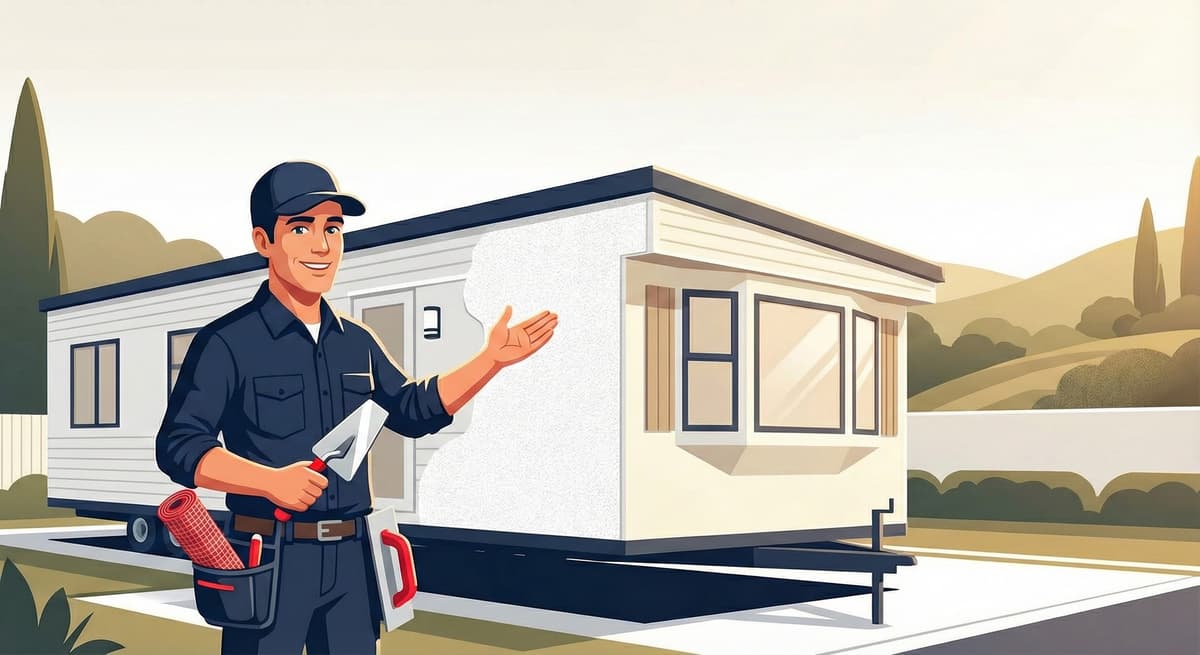
One of the most effective ways to increase the value and "curb appeal" of a manufactured home is to replace the dated vinyl or aluminum siding with stucco. It transforms the property, making it look like a site-built custom home.
However, applying heavy cement to a mobile home chassis involves engineering risks. Modular homes are designed to flex during transport and settling; stucco is rigid. If done incorrectly, the weight can buckle the walls, and the movement will crack the finish. This guide explains the safe way to stucco a manufactured home.
1. The Weight Limit: 3-Coat vs. 1-Coat
Before you start, you must understand the load capacity of your home's frame.
- Traditional 3-Coat Stucco: Weighs approx. 10-12 lbs per sq ft.
Verdict: Do Not Use. Most mobile home walls (2x3 or 2x4 studs) cannot support this load without sagging or bowing. - One-Coat / Foam System: Weighs approx. 4-6 lbs per sq ft.
Verdict: Safe. This system uses 1-inch EPS foam board as a base, reducing the amount of heavy cement required while adding insulation (R-Value).
2. Siding Removal: Strip it or Go Over?
The condition of your current siding dictates the prep work.
- Flat Siding (T-111 / Plywood): If it is in good condition (no rot), we can often apply the new paper and lath directly over it. The wood acts as the shear wall.
- Lap Siding / Vinyl: This must be removed. It creates an uneven surface that cannot be waterproofed correctly. We strip it down to the studs and install new plywood sheathing to create a solid substrate.
3. The Critical Detail: Windows & Doors
Mobile home windows are often "flanged" differently than standard residential windows.
The Risk: If you stucco over the existing window flange without proper flashing, water will leak behind the wall.
The Fix: We recommend installing new Z-Bar Flashing or drip caps above every window and door. Ideally, this is the perfect time to replace single-pane aluminum windows with modern vinyl dual-pane units that integrate properly with stucco.
4. Foundation Vents & Skirting
Unlike a house on a concrete slab, a mobile home sits on piers with an air gap underneath.
You cannot stucco the skirting directly to the ground unless you build a block wall foundation.
The Solution: We install a Weep Screed at the floor line (rim joist). Below that line, you can use a cement board skirting system coated in matching stucco texture, but it must be framed independently to allow for ventilation.
Mobile homes settle more than site-built homes. You must install expansion joints (control joints) where the modular sections join together (the "marriage line"). If you stucco over this seam without a joint, a massive crack will form the first time the house shifts.
Conclusion: Upgrade with Caution
Stuccoing a mobile home is a fantastic investment that adds fire resistance and insulation. But it must be engineered lightly. By using a Foam/One-Coat system and respecting the movement of the chassis, Stucco Champions can give your manufactured home a permanent, luxury exterior.
Related ResourcesLast week, we shared What Is One-Coat Stucco? An In-Depth Guide. This is the specific system recommended for mobile homes.