Revealing the Power of Stucco Color and Finish Coats
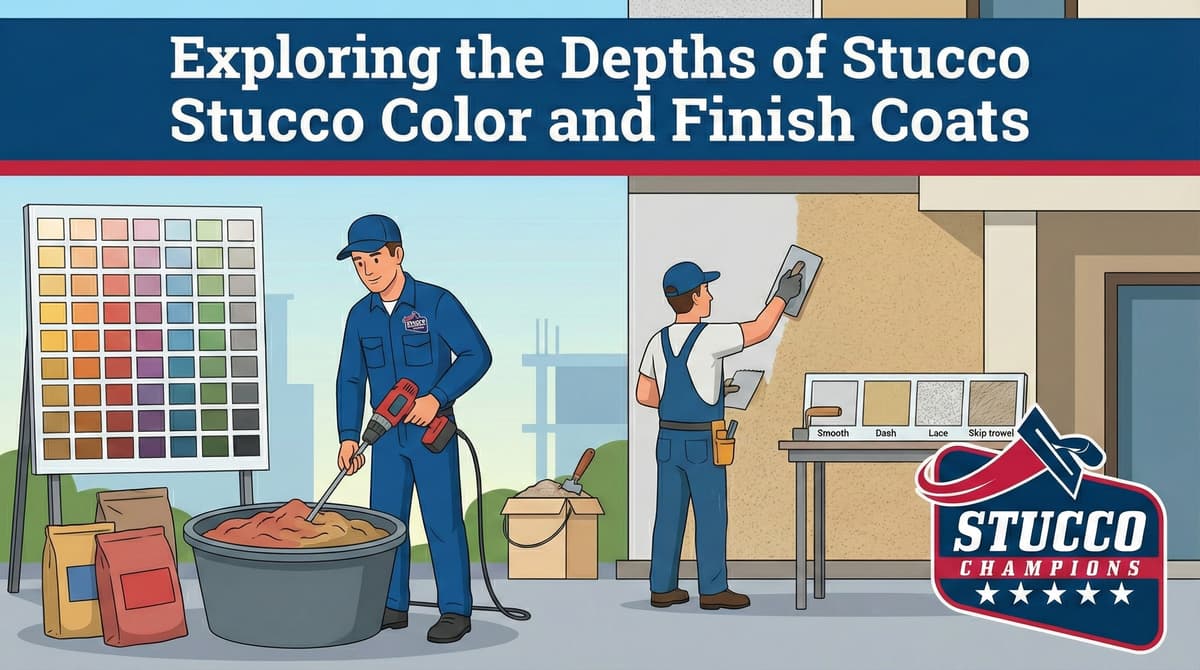
Exploring the Depths of Stucco Color and Finish Coats
When most people look at a stucco home, what they are actually seeing is the finish coat. While the underlying scratch and brown coats provide the structural integrity and fire resistance, the finish layer (often called the "color coat") delivers the curb appeal and the first line of defense against the elements.
Choosing the right finish isn't just about picking a color swtch; it’s about understanding texture, material composition, and long-term maintenance. Here is your expert guide to navigating the final layer of your stucco system.
1. What Exactly is a Finish Coat?
In a traditional three-coat stucco system, the finish coat is the final layer applied over the brown coat. It is typically 1/8-inch thick and serves two primary purposes:
- Aesthetics: It provides the desired color and texture.
- Protection: It seals the underlying cement layers from direct moisture and UV exposure.
Free Assessment
Noticing Stucco Damage?
Get a free on-site assessment from a licensed contractor. $0 deposit, no obligation.
GET FREE ASSESSMENT2. Material Matters: Cementitious vs. Acrylic
Before deciding on a look, you must decide on the material. There are two main contenders in the modern market:
Traditional Cementitious Finishes
This is the "classic" stucco finish. It is a mix of white portland cement, lime, sand, and pigment.
- Pros: Breathable (allows moisture vapor to escape), hardens over time, and has a natural, old-world aesthetic.
- Cons: Colors can be inconsistent due to batch mixing; darker colors tend to fade or become chalky over the years.
Acrylic (Synthetic) Finishes
Acrylic finishes look like traditional stucco but feel slightly rubbery to the touch. They are essentially a high-grade, textured paint with aggregate.
- Pros: immense color consistency (even with dark tones), flexible (bridges small hairline cracks better than cement), and water-repellant.
- Cons: Less breathable than cement (requires proper drainage planes behind it) and can look "plastic" if not applied correctly.
3. Texture: The Personality of Your Home
The texture you choose changes how light hits the building, affecting the perceived color and style.
Common Texture Styles
- Sand Finish (Float Finish): A gritty, uniform texture similar to sandpaper. It is modern, clean, and very popular in contemporary homes.
- Spanish Lace (Skip Trowel): The most common texture in residential housing. It hides imperfections well and offers a classic, forgiving look.
- Santa Barbara (Smooth) Finish: A semi-smooth finish that mimics the look of adobe. It is elegant and high-end but requires a highly skilled plasterer as it shows every imperfection.
- Dash Finish: A rough, sprayed-on texture often used on commercial buildings or older homes.
4. The Truth About "Integral Color"
One of the biggest advantages of a stucco finish coat is integral color. Unlike painted wood siding where the color sits on top, stucco color is mixed into the material.
This means if your wall gets a minor scratch or chip, you won't see raw grey concrete underneath—you’ll see more of the same color. However, homeowners should note that integral colors are "earthier" and softer. If you want a vibrant, high-gloss Royal Blue, you will likely need to paint over the stucco rather than relying on a pre-mixed color coat.
Conclusion
Your stucco finish coat is a 20-to-50-year commitment. Whether you choose the breathability of traditional cement or the flexibility of modern acrylics, ensure your contractor explains the maintenance requirements for your specific choice.
Ready to refresh your home’s exterior? Contact us today to discuss color and texture options that suit your architecture.