Can Weep Screed Be Installed Vertically?
By Stucco Champions··3 min read
Written by Stucco Champions — Southern California’s Authority on Exterior Plastering.
Can Weep Screed Be Installed Vertically? Navigating Stepped Foundations
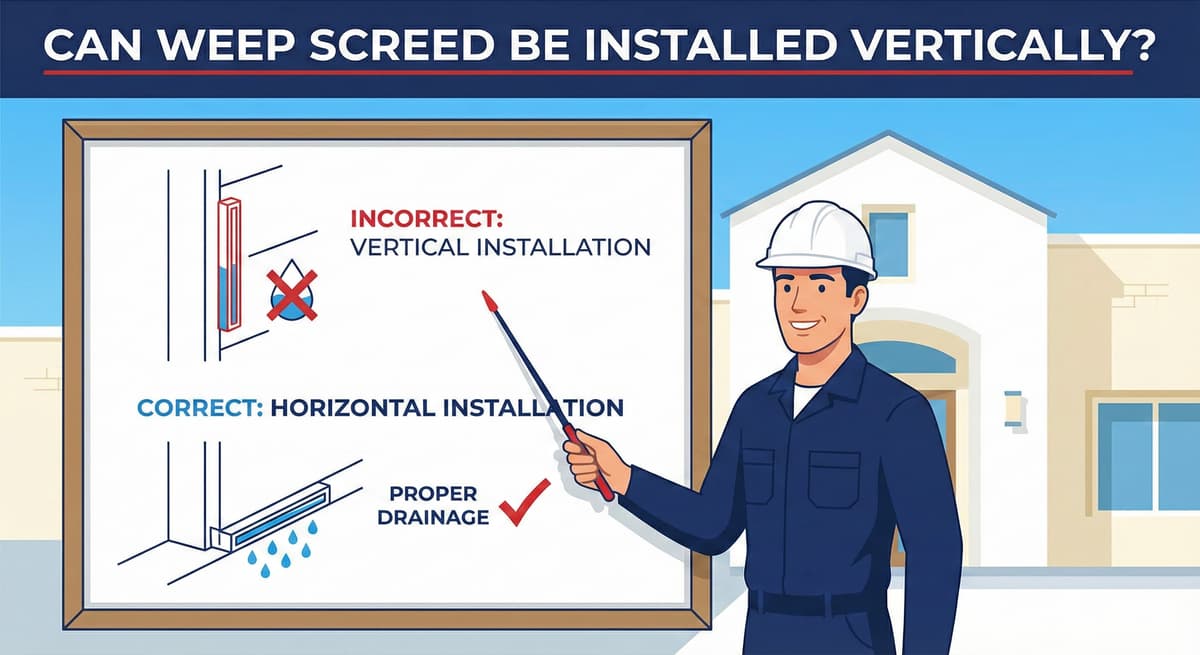
In Southern California, homes are rarely built on perfectly flat ground. Hillside lots in Laguna or stepped terrains in Mission Viejo require foundations that "step up" the slope. This creates a challenge for the weep screed, the critical drainage flashing at the bottom of your wall. Standard weep screed is designed to work horizontally, using gravity to drain moisture. So, what happens when the foundation jumps up 6 inches? Can you turn the screed vertical? The answer is Yes, but with strict limitations regarding water management.1. The Purpose of the Vertical Screed
Weep screed has holes in the bottom flange to let water out. If you install it vertically, gravity pulls the water down the channel, not out of the holes. However, code requires a continuous metal break between the stucco and the foundation. Therefore, on a "stepped" footing, you must install a vertical leg to connect the lower horizontal screed to the upper horizontal screed. The Connector In this specific vertical application, the screed is not acting as a drain; it is acting as a Plaster Stop (straight edge) and a separation barrier for the wood framing behind it.2. The "Step-Up" Technique
When a foundation steps up, you cannot just angle the screed diagonally (a common "lazy contractor" mistake). It must follow the concrete 90-degree angles.- Horizontal Run: Installed 4 inches above earth.
- Vertical Rise: The screed turns 90 degrees up the step.
- Upper Horizontal Run: Turns 90 degrees back to horizontal.
3. Weep Screed vs. Plaster Stop
This is where DIYers get confused. Weep Screed (Type #7): Has holes. Used at the bottom of the wall. Plaster Stop (Casing Bead): Solid metal "J" shape. No holes. Used around doors and electrical panels. On a vertical step, you can technically use a Plaster Stop for the vertical leg since it doesn't need to drain, but most pros use Weep Screed continuously to maintain a uniform appearance and depth (7/8"). The holes in the vertical leg are irrelevant, but the profile matches the rest of the wall. ⚠️ The Drainage Trap The most critical detail in a stepped installation is the Inside Corner where the vertical leg meets the lower horizontal leg. You must ensure the building paper laps over the vertical flange and that the vertical flange laps over the lower horizontal flange. If you reverse this lap, water will run behind the lower screed and into your foundation plate.4. Aesthetic Considerations
Vertical screeds are visible. They create a silver metal line running up your wall. The Pro Tip: We often paint the vertical face of the screed to match the stucco color, or we ensure the finish coat is brought flush to the edge to minimize the visual impact of the metal line.Conclusion: Geometry Dictates Flow
You can (and must) install screed vertically on stepped foundations to maintain code compliance. However, it stops functioning as a drain and starts functioning as a flashing. The waterproofing paper behind it must be flawless to prevent the "step" from becoming a water shelf. Related Resources Last week, we shared Installing Weep Screed Around Stairs. This guide covers the complex cuts required for stair stringers.weep screed