Can I Paint My Stucco? An Expert Guide
By Stucco Champions··3 min read
Written by Stucco Champions — Southern California’s Authority on Exterior Plastering.
Can I Paint My Stucco? An Expert Guide to Coating Masonry
One of the most common questions homeowners ask us is: "Should I re-stucco, or can I just paint it?" The short answer is: Yes, you can paint stucco. However, painting transforms your wall from a maintenance-free, breathable system into a sealed surface that requires upkeep. Before you roll on a coat of latex, you need to understand the chemistry of what you are covering.1. The Permeability Problem
Stucco is designed to absorb and release moisture. It "breathes." When you paint stucco with standard house paint, you create a plastic film that seals the pores. The Risk: If moisture vapor from inside your home (cooking, showers) tries to escape through the walls and hits this paint barrier, it will push the paint off the wall. This causes blistering and peeling. The Solution You must use High-Permeability Acrylic or Elastomeric masonry paints. These coatings are engineered to stop rain from entering (waterproof in) while allowing vapor to escape (breathable out).2. Painting New Stucco: The Cure Time
Never paint fresh stucco immediately. New cement has a very high pH (alkalinity). If you paint too soon, the alkali will burn through the paint ("saponification"), turning it into a soapy mess that slides off the wall.- Standard Rule: Wait 28 Days for the stucco to fully cure and the pH to drop.
- Fast Track: If you can't wait, you must use a specialized "Hot Masonry Primer" (like Loxon) that can handle pH levels up to 13.
3. Painting Old Stucco: The Prep Work
90% of a paint failure is due to bad prep. Stucco is textured; it traps dirt, chalking paint, and mildew.-
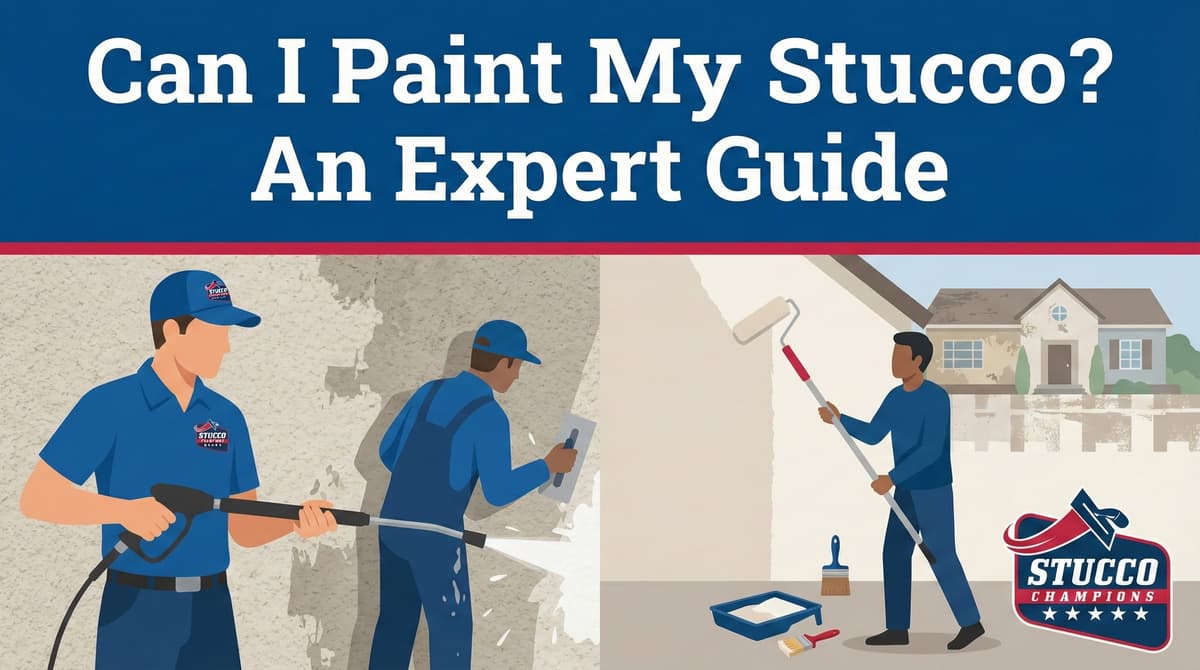
- Pressure Wash: You must remove the "chalk" (oxidized paint powder) or the new paint won't stick.
- Crack Repair: Paint doesn't fill cracks; it highlights them. You must patch hairline fractures with a textured elastomeric sealant first.
- Prime: If the old surface is very chalky or raw cement, use a Masonry Bonding Primer to glue the new topcoat to the wall.
4. Fog Coat vs. Paint
If your stucco has never been painted (it is raw integral color), you have a better option. ⚠️ Consider Fog Coating Fog Coating is a cement-based stain that absorbs into the wall. It restores the color without sealing the surface film. It is cheaper than painting, lasts longer, and never peels. If your wall absorbs water, choose Fog Coat over Paint.5. Painting the "Brown Coat"
Sometimes, homeowners want to save money by painting directly over the grey base coat (Brown Coat) instead of applying a color finish coat. Can you do it? Yes. Should you? It depends. The brown coat is rough and sandy. Painting it seals it, but you lose the beautiful texture of a traditional finish. However, painting a smooth brown coat is a budget-friendly way to achieve a "Santa Barbara" look if executed perfectly.Conclusion: Choose the Right Product
Painting is a valid way to change the color of your home, but you must respect the substrate. Use high-quality masonry coatings, not cheap latex. Prep the surface thoroughly. And if your stucco is unpainted, seriously consider Fog Coating to maintain the integrity of the system. Related Resources Last week, we shared How to Maintain Your Stucco Exterior. Painting is just one part of the maintenance cycle.Stuccostucco paint