Written by Stucco Champions — Southern California’s Authority on Exterior Plastering.
What Is Stucco? The Complete Homeowner’s Guide to Lifespan & Maintenance
Stucco is more than just a finish; it is an engineered cladding system that has defined California architecture for a century. From Mission Revival to modern minimalism, stucco provides the thermal mass, fire resistance, and durability required in our climate.
However, understanding what stucco
is—specifically the difference between traditional cement and synthetic systems—is critical for maintenance. This guide breaks down the lifecycle of a stucco home and how to protect your investment.
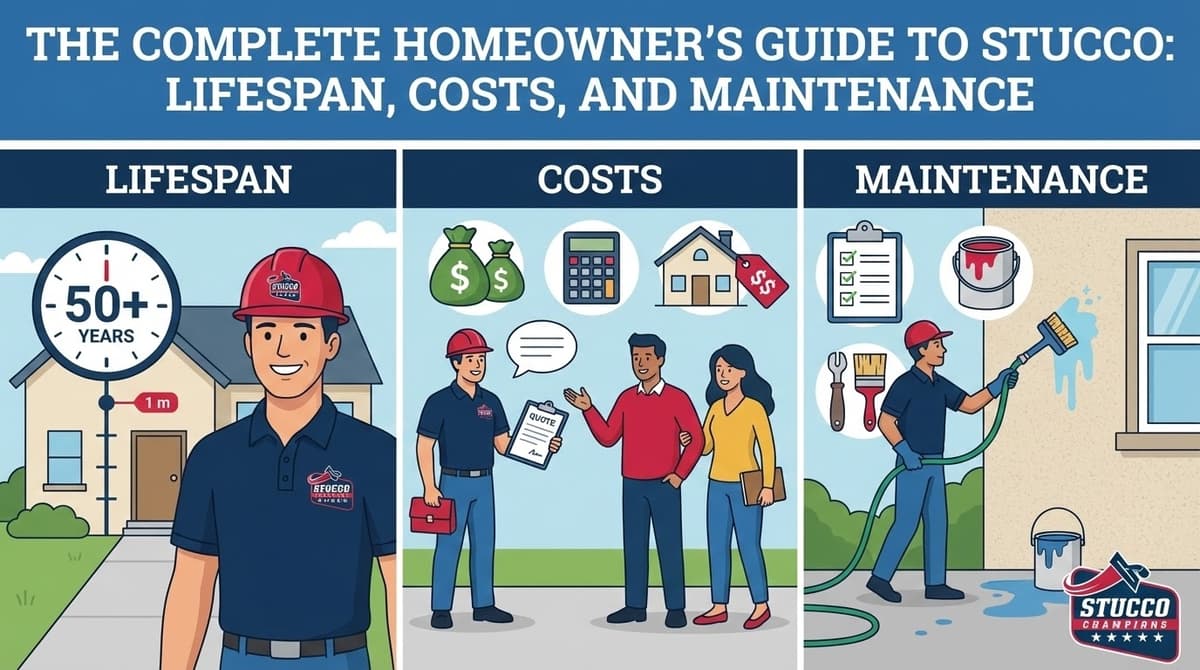
1. Longevity: The 50-Year Skin
A properly installed
Three-Coat Stucco System is designed to last 50 to 80 years. Unlike wood siding that rots or vinyl that cracks, cement stucco hardens over time.
Key Factors for Longevity
- Application Quality: Adherence to ASTM C926 mixing and curing standards.
- Moisture Control: Proper clearance at the weep screed (4" above grade) to prevent wicking.
- Maintenance: Keeping cracks sealed to protect the wire lath from rust.
2. Stucco vs. The Competition
Why is stucco the standard in the West?
| Material |
Durability |
Fire Rating |
Maintenance |
| Stucco |
50–80 years |
1-Hour (Class A) |
Low (Wash/Seal) |
| Vinyl Siding |
20–30 years |
Melts |
Low |
| Wood Siding |
15–25 years |
Combustible |
High (Paint/Caulk) |
3. Diagnosing Cracks: When to Worry
All concrete cracks. The key is knowing the difference between a stress fracture and a structural failure.
| Crack Type |
Possible Cause |
Recommended Fix |
| Hairline (<1/16") |
Curing shrinkage or thermal expansion. |
Fog Coat or Elastomeric Paint. |
| Diagonal (Stair-Step) |
Foundation settling or shear movement. |
Monitor; install control joints if active. |
| Spiderwebbing |
Rapid drying (Hot weather application). |
Acrylic finish coat to bridge cracks. |
| Rust Stains |
Corroding lath inside the wall. |
Urgent. Requires cut-out and lath replacement. |
4. Restoration: Paint vs. Re-Stucco
When your stucco looks tired, you have three options. Choose based on the condition of the substrate.
- Paint: Good for cosmetic refresh on sound walls. Warning: Use breathable masonry paint only.
- Fog Coat: Best for unpainted stucco. Re-stains the cement without sealing the pores. Lifespan: 10-15 years.
- Full Restucco: The only fix for widespread delamination or deep cracking. We apply a new base coat and mesh over the entire home. Lifespan: 30-50 years.
5. The Myth of "Waterproof" Stucco
Reality: Stucco is not waterproof. It is a reservoir system that absorbs and releases moisture.
The Defense: The true waterproofing is the
Grade D Paper behind the stucco. Never rely on the stucco alone to stop water; ensure your flashings and paper laps are intact.
Conclusion: Invest in the Envelope
Your home's exterior is its first line of defense. By understanding the difference between cosmetic aging and structural failure, you can make informed decisions about maintenance. Regular inspections and timely repairs are the key to making your stucco last a lifetime.
Related Resources
Last week, we shared
5 Reasons Stucco is Best for CA. Learn why this material dominates our region.
Need Stucco Help?
Get a free assessment from our licensed team.
GET FREE ASSESSMENT