Stucco Finishes: A Practical Guide to the Most Popular Types
By Stucco Champions··3 min read
Written by Stucco Champions — Southern California’s Authority on Exterior Plastering.
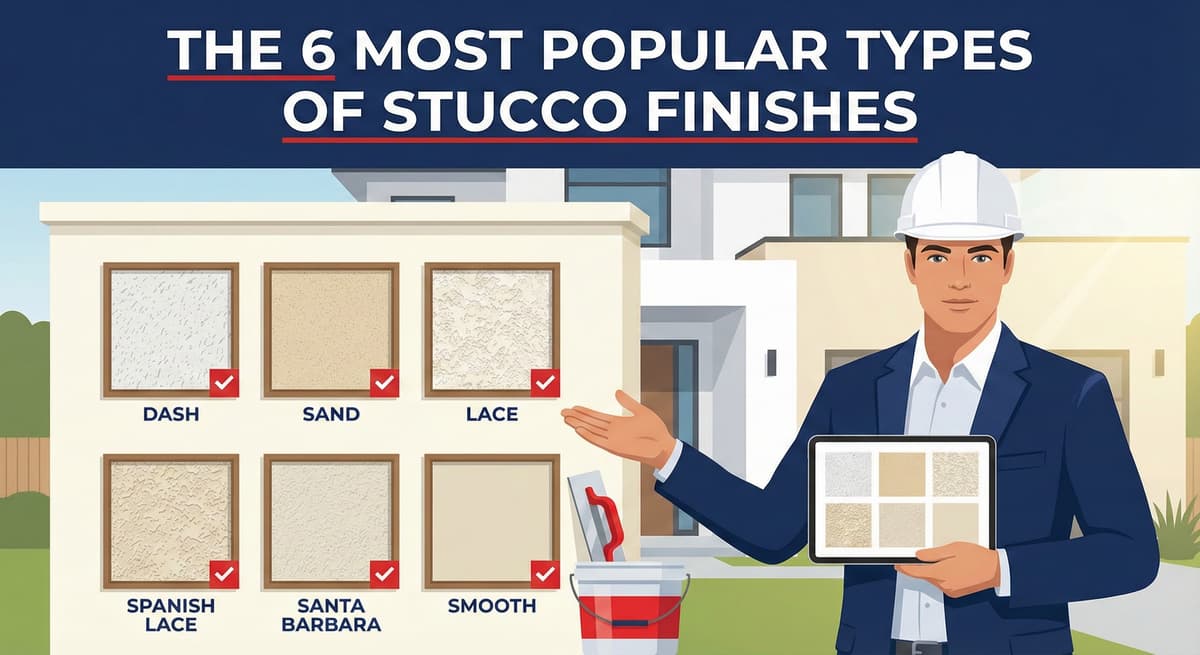
The 6 Most Popular Types of Stucco Finishes: A Technical Guide
Your home's curb appeal is defined by its texture. In Southern California, the finish of your stucco dictates not just the aesthetic style—from Mediterranean to Modern—but also the maintenance requirements and longevity of the wall. Choosing a finish is a commitment. A smooth finish requires flawless framing; a heavy texture hides sins but catches dust. This guide breaks down the six most common stucco finishes, analyzing their pros, cons, and technical requirements.1. Santa Barbara Smooth (The Premium)
The Look: Sleek, modern, and undulating. It mimics the look of old adobe or interior plaster. Application: Requires a skilled artisan using a steel pool trowel to burnish the surface. Pros: Extremely elegant. The definitive look for high-end custom homes in Newport Beach and LA. Cons: It will crack. Without heavy sand aggregate to relieve tension, hairline "spiderweb" cracking is inevitable. It also highlights any waves in the framing ("telegraphing").2. Sand Finish (The Modern Standard)
The Look: Uniform grit, similar to sandpaper. Application: Applied with a trowel and finished with a green sponge float to bring the aggregate to the surface. Pros: Clean, crisp lines ideal for contemporary architecture. It is easier to patch than smooth stucco because the sand helps blend the transition. Cons: If applied by an inexperienced crew, you will see circular "swirl marks" from the float. It requires consistent hydration to prevent color variation.3. Spanish Lace / Skip Trowel (The Classic)
The Look: The traditional "California Stucco." A base coat with flattened islands of texture "skipped" over the top. Application: Hand-troweled. Pros: The most forgiving finish. The heavy texture hides framing imperfections, dirt, and future patch repairs exceptionally well. It is structurally robust. Cons: Can look dated on modern homes. The deep crevices can trap dust and spiderwebs, requiring annual pressure washing.4. Machine Dash (The Commercial Choice)
The Look: A rough, pebbled popcorn texture. Application: Sprayed on with a hopper gun or pump. Pros: Fast and cost-effective. It adds significant density to the wall. Because the spray pattern is random, it is surprisingly easy to patch without leaving a "scar." Cons: Very rough to the touch. It can be abrasive if you brush against it and is difficult to paint later due to the surface area.5. Tex-Cote / Heavy Acrylic (The Coating)
The Look: A very thick, rubberized paint applied over existing stucco. Application: Sprayed on at high mil thickness. Pros: Bridges hairline cracks and provides a uniform color. Often marketed as a "Cool Wall" system. Cons: Breathability issues. If applied over a wall that lacks a proper moisture barrier, it can trap water, leading to blistering. Once applied, it is difficult to remove or stucco over.6. Synthetic / Acrylic Finish (The New Standard)
The Look: Similar to Sand Finish but with deeper, more consistent color. Application: Troweled on 1/16" thick over a brown coat or foam board. Pros: Flexible. The polymers allow the finish to stretch, resisting the hairline cracks that plague traditional cement. It holds dark colors (Navy, Charcoal) without fading. Cons: [Image of thermal imaging camera usage] (Note: Placeholder for moisture detection). Less breathable than cement. Requires precise flashing details to prevent water entrapment. ⚠️ The Selection Rule Don't pick based on a photo. Photos flatten texture. We recommend applying physical samples (2' x 2') on your wall to see how the sunlight hits the texture at different times of day. Shadows change everything.Conclusion: Texture is Engineering
The texture you choose is not just about style; it's about engineering. If your house has settled and has cracks, a Spanish Lace will hide them; a Smooth finish will highlight them. At Stucco Champions, we help you balance your aesthetic goals with the structural reality of your home. Related Resources Last week, we shared What is Sand Finish Stucco? Dive deeper into the most popular modern finish.Stucco Finishes