Stucco Exterior Maintenance Guide for Homeowners
Written by Stucco Champions — Southern California’s Authority on Exterior Plastering.
Stucco Exterior Maintenance: Protecting Your Investment in Southern California
Stucco is the dominant exterior finish in Southern California for a reason: it is fire-resistant, durable, and handles our heat waves better than vinyl or wood. However, "low maintenance" does not mean "no maintenance."
Between the coastal salt air in Newport Beach, the seismic shifting in Mission Viejo, and the relentless UV exposure, your stucco needs proactive care. Without it, minor hairline cracks can turn into major water intrusion issues. This guide outlines the professional strategies to extend the life of your exterior envelope.
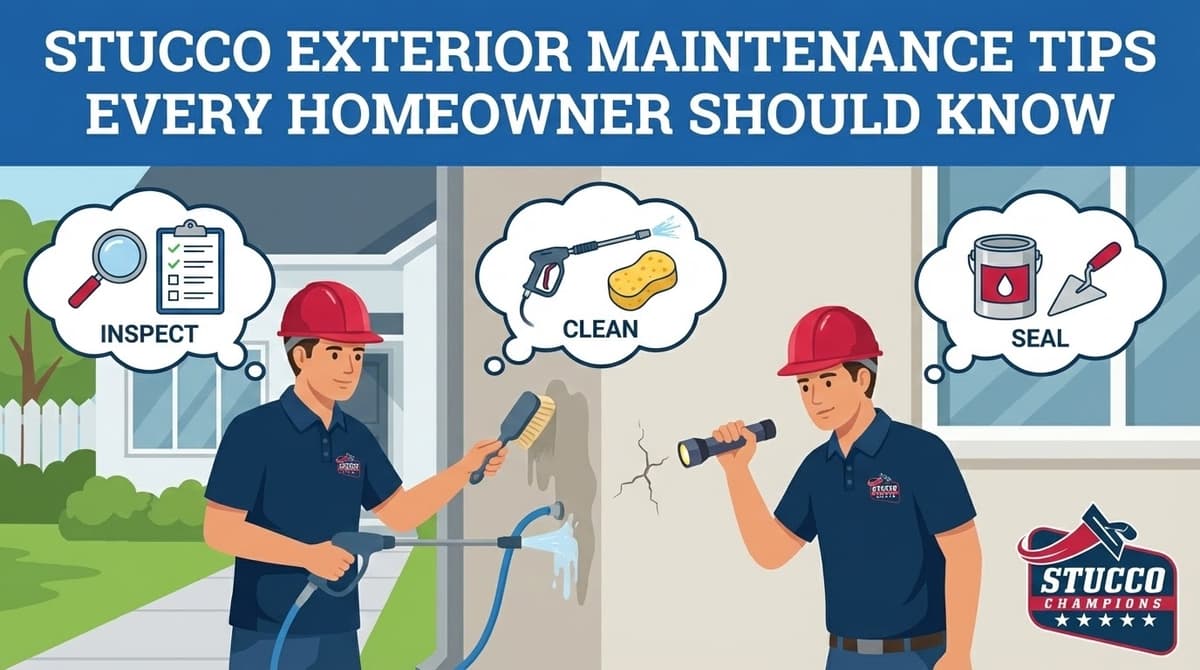
1. Seasonal Inspections: The "Walk-Around"
We recommend walking the perimeter of your home at least twice a year (Spring and Fall). You are looking for subtle changes in the surface that indicate stress.
- Hairline Cracks: Common and often cosmetic.
- Efflorescence: White, chalky powder indicating moisture is moving through the wall.
- Bubbling/Bulging: A sign that the stucco has delaminated (detached) from the lath due to trapped water.
Note: In coastal zones, inspect every 3–4 months. Salt accumulation accelerates corrosion of the underlying wire lath.
When was your last stucco checkup? Our free Health Assessment takes 60 seconds.2. Cleaning Protocols: The "No Pressure" Rule
The most common mistake homeowners make is attacking their stucco with a high-pressure power washer. Do not do this. High pressure (3,000+ PSI) can blast the finish coat off the wall and force water through the porous cement, soaking the paper barrier underneath.
The Safe Cleaning MethodTools: Garden hose with a spray nozzle and a soft-bristle automotive brush.
Solution: Warm water mixed with a mild dish soap. For green algae or mildew (common on north-facing walls), use a specialized masonry cleaner. Avoid straight bleach, as it can discolor the cement pigments.
3. Crack Management
Stucco is rigid; it will crack. The key is managing the width.
- Hairline (< 1/16"): Seal with a high-quality textured acrylic caulk to prevent moisture entry.
- Structural (> 1/8"): If a crack is wide enough to insert a credit card, do not just patch it. This requires a professional assessment to check for lath failure or foundation settling.
4. Landscaping and Weep Screeds
The number one cause of stucco rot is improper landscaping.
⚠️ The 4-Inch RuleAccording to California building code, you must maintain a clearance between the earth and the metal weep screed at the bottom of your wall.
Soil/Mulch: 4 inches minimum clearance.
Paving/Concrete: 2 inches minimum clearance.
Blocking this screed traps moisture inside the wall and provides a bridge for termites.
5. Sprinkler Audit
Check your irrigation. Sprinklers should never spray directly onto the stucco. Constant wetting and drying cycles break down the waterproof paper and cause efflorescence staining.
6. Coatings: Paint vs. Fog
If your stucco looks faded, you have two options. Choose carefully based on breathability.
- Fog Coat: For unpainted stucco, this cement-based stain absorbs into the wall, restoring color while keeping the pores open.
- Breathable Paint: If you must paint, use high-quality masonry paints or elastomeric coatings that are permeable (allow vapor to escape). Never use cheap latex, which seals moisture inside and causes blistering.
Stucco Maintenance Checklist
| Task | Frequency | Notes |
|---|---|---|
| Visual Inspection | Twice per year | Look for cracks, rust stains, and soft spots. |
| Gentle Cleaning | Annually | Use low-pressure hose and mild detergent. |
| Crack Sealing | As needed | Use textured acrylic caulk for hairlines. |
| Window/Door Caulking | Annually | Replace deteriorated sealant to prevent leaks. |
| Weep Screed Clearance | Ongoing | Keep soil and mulch 4" below the metal flashing. |
| Repainting/Refinishing | Every 7–10 years | Use breathable, stucco-safe coatings. |
Conclusion: Proactive Care Saves Money
Stucco is built to last, but only if you treat it right. By keeping the weep screeds clear, washing gently, and sealing cracks early, you can extend the life of your exterior indefinitely. If you spot structural issues, call a professional immediately to prevent dry rot.
Related ResourcesExplore our Stucco Repair Services to learn how we restore damaged exteriors.
Learn more from the California Contractors State License Board about proper home maintenance standards.
Time for a Stucco Checkup?
Our free interactive assessments catch problems before they become expensive repairs.