Signs Your Home Needs Restucco
By Stucco Champions··3 min read
Written by Stucco Champions — Southern California’s Authority on Exterior Plastering.
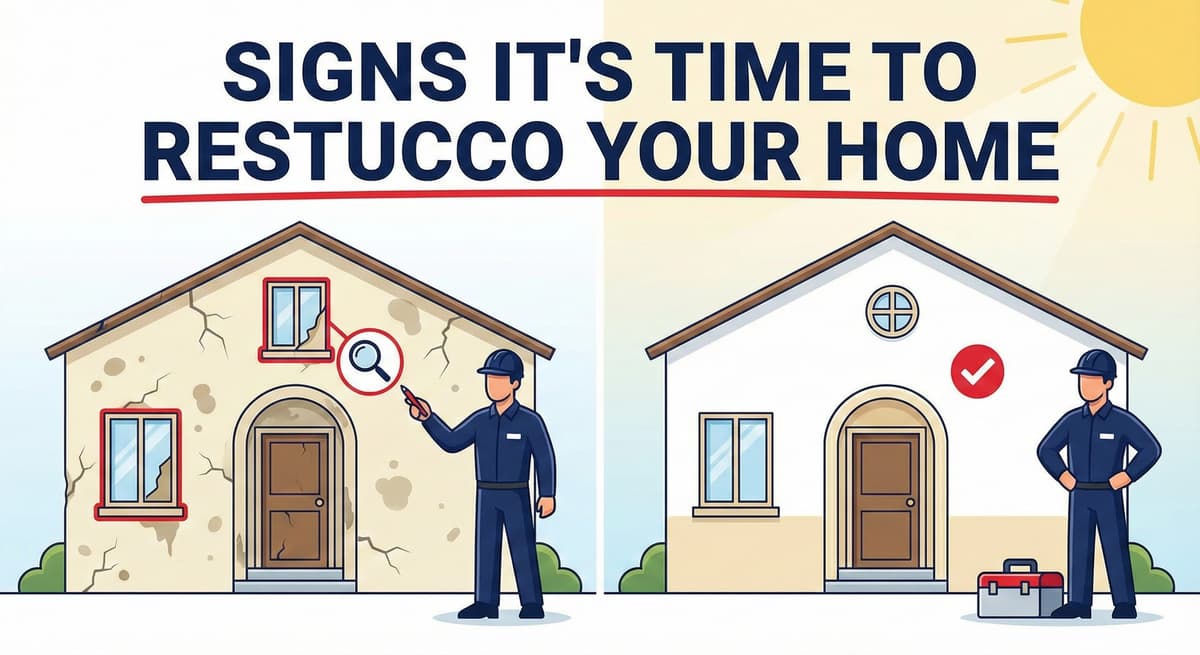
5 Warning Signs: When to Repair vs. When to Restucco
Stucco is one of the most durable finishes in the world, but it is not invincible. In Southern California, our homes endure a "thermal beating"—hot days, cool nights, and seismic tremors. Over time, this stress causes the rigid cement shell to fail. The dilemma for homeowners is determining severity. Is that crack just cosmetic, or is it a sign that the building envelope has failed? This guide breaks down the critical warning signs that indicate your home needs a full Restucco (Resurfacing) rather than another patch.1. Recurring Cracks (The "Telegraph" Effect)
If you fix a crack and it comes back in the exact same spot 6 months later, you have a structural issue. The Cause: The wire lath underneath has likely snapped or rusted, meaning the stucco has lost its tensile strength. Why Patching Fails: You cannot fix broken lath with surface putty. A Restucco allows us to embed a new layer of fiberglass mesh over the entire wall, creating a new "floating skin" that resists movement.2. Delamination (The Hollow Sound)
Go outside and tap on your wall near a crack. Does it sound like solid rock, or does it sound hollow like a drum? The Cause: "Delamination" means the stucco layers have separated from each other or from the lath. The bond is broken. The Risk: Large chunks of stucco can detach and fall (spalling). This is a safety hazard and requires stripping the loose material and resurfacing the wall.3. Rust Stains (Corrosion)
If you see brown or orange stains bleeding through your paint, your home is rusting from the inside out. The Cause: Moisture has penetrated the stucco and is corroding the galvanized wire lath ("Rust Jacking"). As steel rusts, it expands, cracking the stucco further. The Fix: You cannot paint over rust. You must re-stucco to seal the envelope and stop the water intrusion.4. Efflorescence & Dark Spots
White powdery stains (efflorescence) or dark blotches near the foundation indicate that water is trapped behind the wall. The Issue: The drainage plane (building paper) has failed or the weep screed is blocked. The Solution: A Restucco allows us to retrofit the weep screeds and apply a new breathable finish that allows trapped moisture to escape.5. The "Quilt" Effect (Patch Fatigue)
If your home has been patched 5 or 6 times over the years, it likely looks like a quilt of mismatched textures. The Reality: It is impossible to make 5 different patches match 20-year-old stucco perfectly. The Solution: A full restucco provides a uniform, monolithic finish from corner to corner, instantly modernizing the curb appeal and increasing property value. Decision Matrix: Repair vs. Restucco| Issue | Patch It | Restucco It |
|---|---|---|
| Hairline Cracks | ✅ Yes | No |
| Water Stains | ✅ Yes (Clean) | If severe |
| Bulging Wall | ❌ No | ✅ Yes (Structural) |
| Outdated Texture | ❌ No | ✅ Yes (Aesthetic) |
| Failed Paint | ❌ No | ✅ Yes (Sandblast) |
Conclusion: Listen to Your House
Your home is talking to you. Cracks, stains, and bulges are its way of saying the armor is failing. Ignoring these signs leads to dry rot and termite damage. A timely restucco is not just an expense; it is an investment that secures the structural health of your property for the next 30 years. Related Resources Last week, we shared The Complete Homeowner’s Guide to Restuccoing. Learn about the process step-by-step.RestuccoStucco Cracks