Restucco Your Home the Right Way: Prep Guide Inside
By Stucco Champions··3 min read
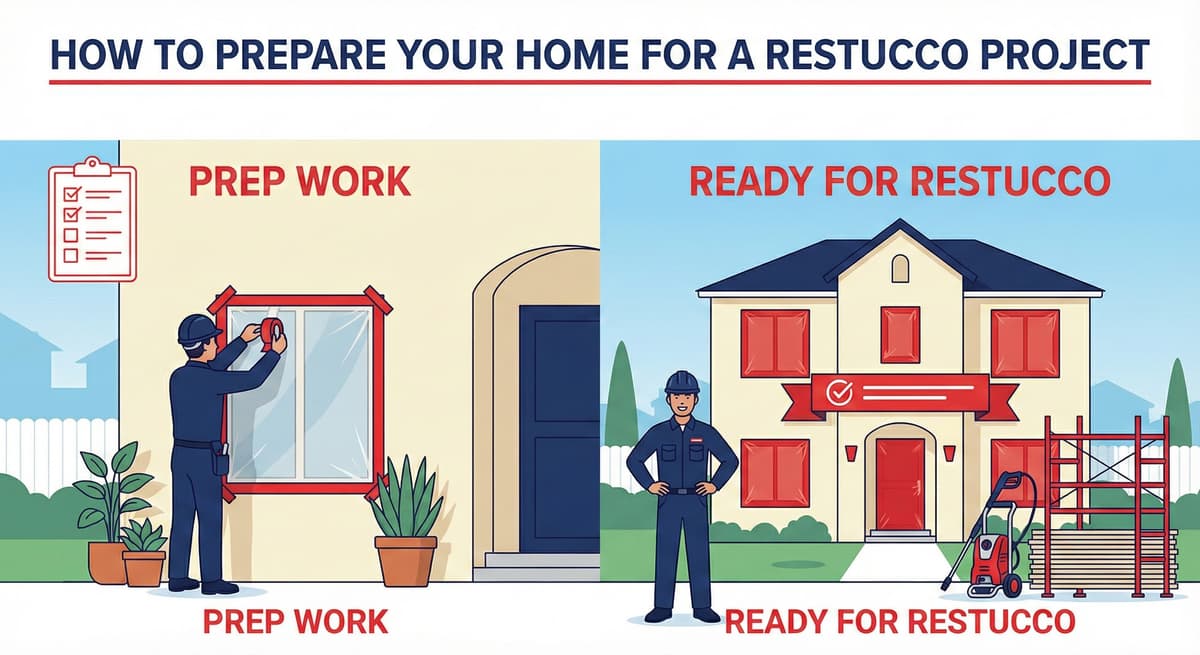
Written by Stucco Champions — Southern California’s Authority on Exterior Plastering.
Essential Checklist: Preparing Your Home for a Stucco Project
A stucco project involves heavy machinery, scaffolding, sandblasting, and wet cement. It is a major construction event. While our crews take every precaution to protect your property, the work zone is dynamic and messy by nature. To ensure the project runs safely and the finish cures without defects, homeowners must prepare the site before we arrive. This guide outlines the logistical requirements for a successful restucco.1. The Perimeter Clearance Rule
Stucco application requires full access to the wall, from the roofline down to the foundation. Scaffolding Requirements: If your home is two stories, we must erect OSHA-compliant scaffolding. This requires a 3 to 4-foot clearance around the entire perimeter.- Hardscape: Move patio furniture, BBQs, and potted plants at least 10 feet away from the walls to avoid dust and overspray.
- Storage: Clear side yards of trash bins, bikes, or kayaks. If we can't walk through, we can't lathe the wall.
2. Landscaping: The "Cut Back"
Plants touching the wall are the enemy of a good finish. The Risk: If a branch rubs against wet stucco, it ruins the texture. If vines are left attached, they rot under the new paper. The Action: Trim all trees and shrubs back at least 18 to 24 inches from the wall. This allows our crew to apply the paper and wire without obstruction. ⚠️ The Water Shut-Off Turn off your automated sprinklers 24 hours before we start. Wet walls cannot be waterproofed. If sprinklers hit the fresh brown coat, they will wash out the cement paste, weakening the bond. Keep them off until the finish coat is fully cured (approx. 48 hours after completion).3. Vibration Control: Interior Safety
The most overlooked aspect of stucco work is Vibration. Sandblasting & Lathing: These processes vibrate the framing of the house. The Consequence: Pictures can walk off the walls. Plates can rattle off shelves. The Fix: Remove all unsecured wall hangings, mirrors, and fragile items from interior shelves, especially on exterior-facing walls.4. Window & Door Protocols
We mask all windows with heavy poly-sheeting and tape, but dust is insidious. Lock It Up: Ensure all windows are fully closed and locked. A cracked window will allow silica dust to enter the home during sandblasting. Access: We rarely need inside the house, but we need access to the electrical panel (for mixers) and a hose bib (for water).5. The "Weep Screed" Excavation
If you have an older home with stucco buried in the dirt, we may need to trench the perimeter. Why? Code requires the weep screed to be 4 inches above the earth. Prep: Pull back mulch or decorative rock 6-8 inches from the foundation to allow us to install the new drainage flashing correctly.Conclusion: A Partnership in Prep
A successful stucco job is a partnership. You clear the path, and we execute the work. By handling vegetation and perimeter clearance proactively, you eliminate delays and ensure our crew can focus entirely on the craftsmanship of your new exterior. Related Resources Last week, we shared The Complete Homeowner’s Guide to Restuccoing. Understand the full process timeline here.ProjectsRestuccoStucco