Ultimate Guide to Repair Contractors and Water Damage Repair
By Stucco Champions··3 min read
Written by Stucco Champions — Southern California’s Authority on Exterior Plastering.
The Essential Guide to Finding the Right Contractor for Home Repairs
Homeownership brings pride, but it also brings maintenance. In Southern California, where the sun, salt air, and seismic activity constantly test your home's exterior, finding a reliable repair contractor is critical. Whether it is a cracked foundation or a failing stucco wall, you need more than a handyman; you need a specialist. However, not all "repair contractors" are created equal. A generalist who fixes faucets is rarely qualified to restore the structural integrity of a building envelope. This guide walks you through the specialized world of exterior restoration and how to vet a contractor who understands the science of your home.1. The Specialist vs. The Generalist
Many homeowners make the mistake of hiring a general handyman for specialized work. While they may be cheaper, they often lack the knowledge of ASTM Standards and local building codes. When to Call a Specialist- Stucco Cracks: Indicates framing movement or water intrusion. Requires a Stucco Specialist.
- Foundation Settling: Sloped floors or diagonal cracks. Requires a Foundation Expert.
- Roof Leaks: Water stains on ceilings. Requires a Roofing Contractor.
2. Water Damage: The Silent Destroyer
Water is the #1 enemy of your home. If you see a stain on your exterior wall or drywall, the damage inside is often 10x worse. The Restoration Protocol: True water damage repair is surgical. 1. Assessment: Using moisture meters and thermal imaging to map the damage. 2. Extraction: Opening the wall to remove wet insulation and treat mold. 3. Restoration: Rebuilding the waterproofing paper (shingle lapped) before applying new finishes. ⚠️ The "Handyman Patch" Warning A handyman will often just smear cement or paint over a water stain. This traps the moisture inside the wall, creating a greenhouse effect that accelerates rot and mold growth. You must address the root cause (drainage) before closing the wall.3. Vetting Your Contractor: The Checklist
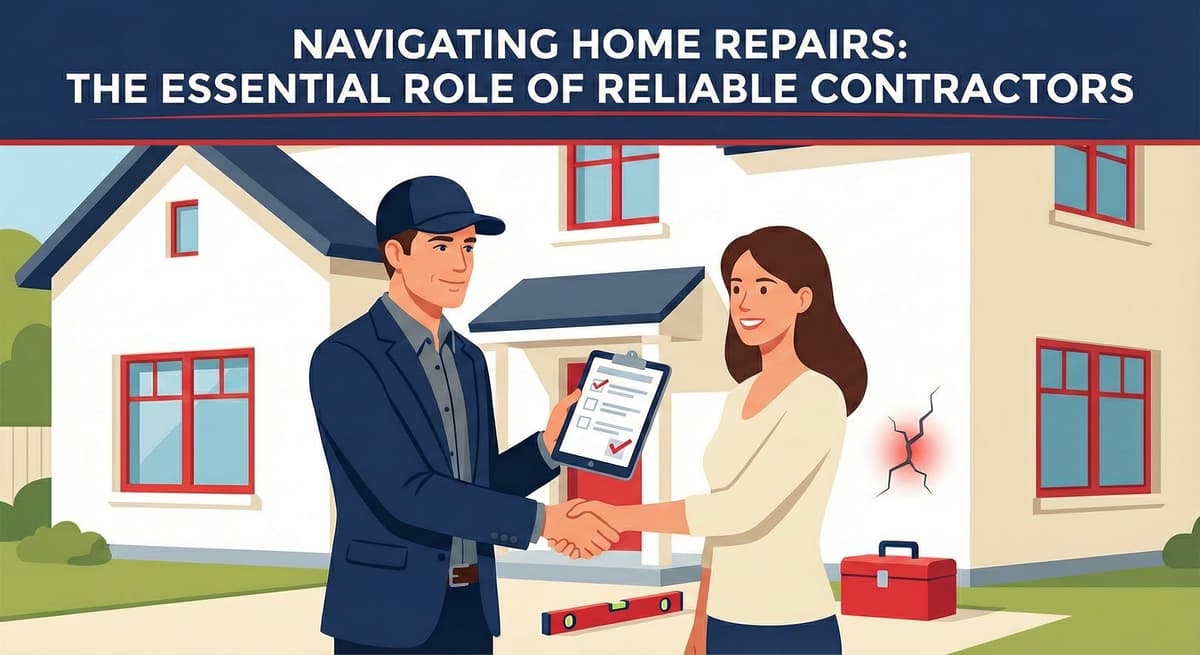
Don't hire based on a handshake. Use this checklist to protect yourself.- License: Verify their C-35 (Lathing & Plastering) or B (General) license with the CSLB. Unlicensed work is illegal for jobs over $500.
- Insurance: Ask for a Certificate of Insurance (General Liability & Workers Comp). If a worker falls off a ladder on your property, you could be liable without it.
- Detailed Estimate: Avoid "napkin quotes." A professional estimate details the scope: "Remove 20 sq ft, replace paper, install 17ga wire lath, apply 3-coat stucco."
- Portfolio: Ask to see photos of texture matching. Blending new materials into old is an art form.
4. Technology in Repair
Modern contractors use tools to take the guesswork out of repairs.- Moisture Meters: To verify the framing is dry before rebuilding.
- Drone Inspections: To check second-story windows and chimneys safely without scaffolding.
5. Sustainability Options
Repair is an opportunity to upgrade. Ask about:- Low-VOC Coatings: Finishes that don't off-gas harmful chemicals.
- Energy Efficiency: Adding foam insulation during the repair to lower your cooling bills.