Stucco and Southern California Weather
By Stucco Champions··3 min read
Written by Stucco Champions — Southern California’s Authority on Exterior Plastering.
How Weather Affects Stucco in Southern California: A Technical Maintenance Guide
Southern California is famous for its weather, but what makes it a paradise for people can be a torture test for building materials. Stucco, while durable, is a porous cement product that reacts chemically and physically to its environment. From the corrosive salt air of Newport Beach to the thermal shock of the Riverside deserts, your home’s exterior faces constant micro-climate stressors. This guide breaks down the physics of weathering and the maintenance protocols required to keep your stucco envelope intact.1. The Coastal Effect: Salt & Fog
Living within 5 miles of the Pacific Ocean introduces Marine Corrosion. The morning marine layer carries salt mist inland. Salt is hygroscopic; it absorbs into porous cement and stays there. The Damage: Salt accumulation attacks the galvanized wire lath inside the wall, leading to "Rust Jacking" (expanding rust that cracks the stucco). It also causes efflorescence (white staining). The Fix: Rinse your walls with fresh water (garden hose, low pressure) every 3-4 months to wash away surface salts. Do not let salt crust on the surface.2. The Inland Effect: Thermal Shock
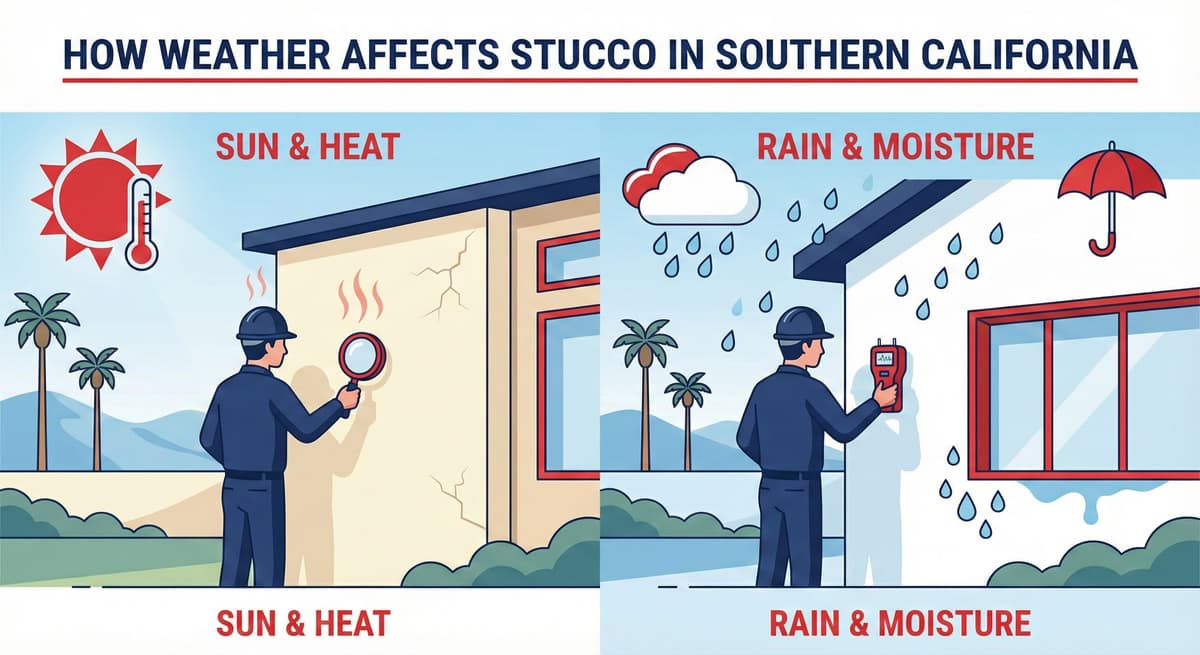
In areas like Mission Viejo or Santa Clarita, the temperature swing is brutal. It can be 100°F at noon and 60°F at night. The Damage: Thermal Shock. Stucco expands in the heat and contracts in the cold. This daily cycling causes "map cracking" (spiderweb patterns). The Fix: Use Elastomeric Paints or flexible acrylic finishes. These coatings stretch with the building, bridging the hairline cracks that rigid cement cannot handle.3. Santa Ana Winds: The Drying Factor
Dry winds suck moisture out of everything. The Damage: If you apply new stucco during a wind event, it "flash dries." The water leaves the mix before the cement can hydrate properly, resulting in a weak, crumbly wall. The Fix: We schedule work around wind forecasts. If we must work, we mist the walls continuously for 48 hours to ensure proper curing.4. UV Radiation: The Color Killer
The sun is relentless. UV rays break down organic pigments. The Damage: Fading and "chalking" (oxidation). Dark blue or yellow homes will turn grey or beige within 3-5 years if standard paint is used. The Fix: Choose inorganic pigments (Earth Tones) or high-performance Acrylic Finishes that encapsulate color. Avoid dark organic colors on south-facing walls.5. Maintenance Matrix: Protect Your Zone
Identify your micro-climate and follow this schedule.| Zone | Primary Threat | Maintenance Action |
|---|---|---|
| Coastal (0-5 Miles) | Salt / Rust | Quarterly fresh water rinse. Monitor for rust stains. |
| Inland / Valley | Heat / Cracking | Seal hairline cracks annually with elastomeric caulk. |
| Canyon / Fire Zone | Ember / Soot | Clear brush 5ft back. Keep weep screeds clear of debris. |
Conclusion: Adapt to Your Environment
Stucco is not "set it and forget it." It is a system that interacts with the weather. By understanding the specific threats of your micro-climate, you can take proactive steps—like rinsing salt or sealing cracks—that extend the life of your exterior by decades. Related Resources Last week, we shared Stucco Exterior Maintenance Guide. Learn the cleaning protocols in detail.Southern CaliforniaStucco